
The CS3D conversation has largely centered on agricultural and manufacturing supply chains. Cocoa from West Africa. Garments from East Africa. Cobalt from the DRC. These are important and well-documented areas of exposure and the attention they are receiving is warranted. The extractives sector more broadly, mining, oil and… Read More
Posted by PML Africa on 21 October 2026

A target company passes legal due diligence. The financial statements are in order. The registry shows no adverse ownership. The deal closes. Integration begins. Then something surfaces. This is not a rare occurrence in African Mergers & Acquisition. It is a pattern consistent enough to warrant its… Read More
Posted by PML Africa on 23 September 2026

The decision to exit an African market is rarely taken lightly. Commercial rationale varies, whether through divestment, restructuring or market withdrawal. What does not vary is the experience of the workers, communities and suppliers left behind: the consequences of a decision made elsewhere, often without warning, consultation or adequate transition… Read More
Posted by PML Africa on 09 September 2026

Issued by Kenya Industrial Property Institute (KIPI) under the Trade Marks Act, our trademark is now formally protected in Kenya. We introduced the PML AFRICA trademark late last year and registering it was the logical next step. For a company whose work centers on protecting the intellectual property of others,… Read More
Posted by PML Africa on 09 September 2026

When a company operates in or sources from a conflict-affected area, it enters a landscape that most corporate responsibility frameworks were not designed to navigate. The obligations are real and they are multiplying. CS3D, the UN Guiding Principles on Business and Human Rights, the OECD Guidelines… Read More
Posted by PML Africa on 11 August 2026

A multinational commissions due diligence on a potential partner. The report arrives, is circulated to the relevant team, acknowledged in an email thread and saved to a shared drive. The deal proceeds. This pattern is more common than the due diligence industry… Read More
Posted by PML Africa on 06 August 2026

Human rights auditing has become a standard feature of supply chain compliance programs. Suppliers are assessed, certificates are issued, and the results are filed as evidence that due diligence has been conducted. For many organizations, the existence of an audit certificate is treated as the end… Read More
Posted by PML Africa on 05 August 2026

Under CS3D, the EU Batteries Regulation and growing investor scrutiny, tracing a supply chain back to the point of extraction is no longer optional. For multinationals sourcing minerals from Africa, it is a legal and commercial obligation that is already in force and becoming more demanding. Read More
Posted by PML Africa on 05 August 2026

In many African markets, it is quite common practice for multinationals to retain a single local firm for both legal advice and investigative intelligence. The convenience is understandable. Building trusted local relationships takes time, and in markets where institutional knowledge is hard to develop from the outside, extending an existing… Read More
Posted by PML Africa on 03 July 2026
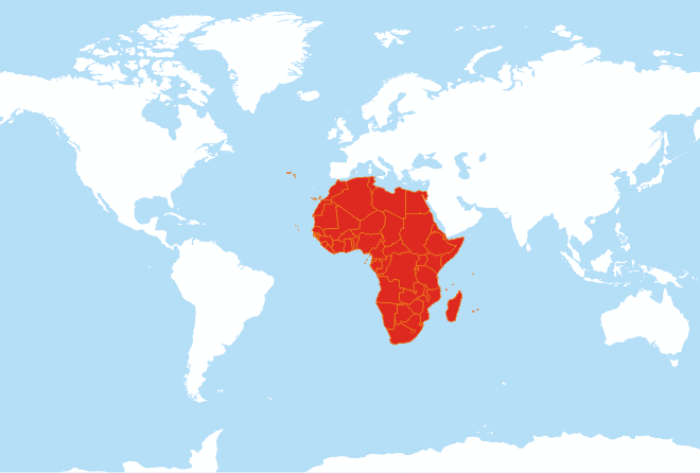
Most due diligence frameworks were designed with a certain operating environment in mind. Searchable registries. Accessible court records. A regulatory infrastructure that, even if imperfect, produces something to work with. Many African countries and parts of the Sahel in particular, do not always offer that environment. In these markets, a… Read More
Posted by PML Africa on 17 June 2026